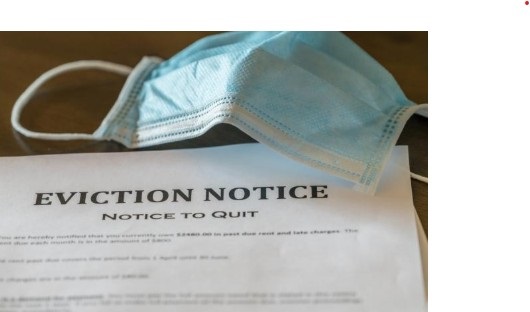

CDC Order Prohibits Residential Evictions
The Center for Disease Control and Prevention (CDC") published an Agency Order on September 4, 2020 (the "Order") temporarily halting residential evictions. The Order prohibits a landlord from evicting a tenant who qualifies as a "covered person" from any residential property until December 31, 2020 without the same level of protection contained in the Order. The Order only restricts a landlord's right to evict a tenant for failure to pay rent or a late payment of rent: however, the Order does not prohibit state, local, territorial or tribal authorities from imposing additional restrictions.
Invoking the Order
The Order extends protections to "covered persons," who are defined in the Order as "any tenant, lessee or resident of a residential property who provides to their landlord, the owner of the residential property, or other person with a legal right to pursue eviction or a possessory action, a declaration under penalty of perjury indicating that:
1) The individual has used best efforts to obtain all available government assistance for rent or housing
2) The individual either: i) expects to earn no more than $99,000 in annual income for Calendar Year 2020 (or no more than $198,000 if filing a joint tax return), ii) was not required to report any income in 2019 to the U.S. Internal Revenue Service, or ill) received an Economic Impact Payment (stimulus check) pursuant to Section 2201 of the CARES Act;
3) The individual is unable to pay the full rent or make a full housing payment due to substantial loss of household income, loss of compensable hours of work or wages, a layoff or extraordinary out-of-pocket medical expenses:
4) The individual is using best efforts to make timely partial payments that are as close to the full payment as the individual's circumstances may permit, taking into account other nondiscretionary expenses; and
5) Eviction would likely render the individual homeless, or force the individual to move into and live in close quarters in a new congregate or shared living setting because the individual has no other available housing options."
Accordingly, individuals are not protected by the Order unless and until they provide their landlord with an executed declaration affirming the abovementioned statements.
What the Order Does Not Do
While the Order prevents evictions generally, the Order does not relieve tenants from their obligation to pay rent, late fees or otherwise comply with the lease. As such, the Order does not prevent tenants from being evicted for reasons other than nonpayment of rent. Additionally, the Order does not limit foreclosures on home mortgages.
Enforcement and Penalties
The Order will be enforced by the U.S. Department of Health and Human Services in conjunction with state and local officials. A violation of the Order can carry stiff penalties for individuals and businesses alike. A person violating the Order may be subject to: 1) a fine of no more than $100,000 if the violation does not result in a death, or one year in jail, or both; or 2) a fine of no more than $250,000 if the violation results in a death or one year in jail, or both, or as otherwise provided by law. Whereas, if a business violates the Order it may be subject to: 1) a fine of no more than $200,000 per event if the violation does not result in a death; or 2) a fine of no more than $500,000 per event if the violation results in a death or as otherwise provided by law.
Conclusion
In conclusion, the Order provides short- term relief through the end of the year to those individuals facing eviction who have, in good faith, provided their landlords with the required declaration. However, those covered persons are not relieved of their obligation to pay rent, and landlords are not restricted from applying penalties, interest or late fees on the tenant's account for non- payment of rent.
For more information, contact Fabio Fortunato at 814/870-7717 or ffortunato@mijb.com
Article featured in the Manufacturer and Business Associations' November 2020 Business Magazine.
Legal Advice Disclaimer:The information presented on this website serves solely as general guidance and should not be construed as legal advice by MacDonald, Illig, Jones & Britton LLP as a replacement for seeking personalized legal counsel from a qualified attorney. MacDonald, Illig, Jones & Britton LLP does not assume liability for the accuracy or reliability of content hosted on any third-party websites accessible through links provided on this site.