
Regulating Service and Emotional Support Animals at Your Business
Many will recall the colorful story of the infamous emotional support peacock whose owner tried to bring him onto an airplane in 2018. With a rise of similar stories, are your businesses and employees prepared as it relates to service and emotional support animals?
Service Animal vs. Emotional Support Animal
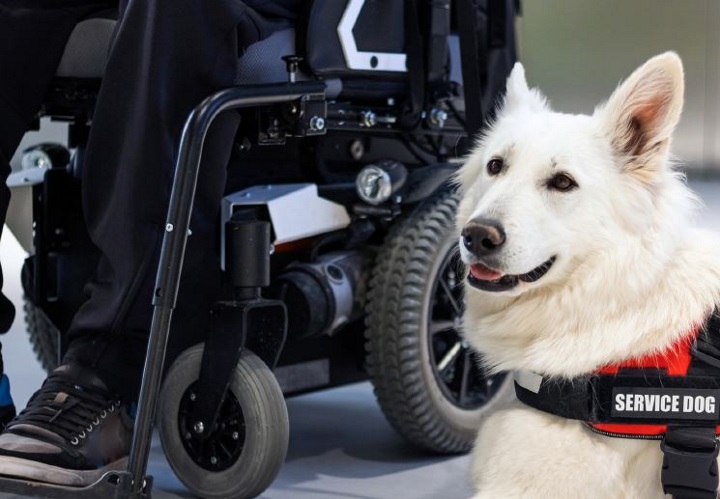
Under the Americans with Disabilities Act, commonly referred to as the "ADA." "service animal" is defined as any dog who is individually trained to work or perform tasks for the benefit of an individual with a physical, sensory, psychiatric, intellectual or other mental disability. Under this definition, other animals are excluded. Notably, the tasks performed by the service animal must be directly related to the individual's disability.
Although the ADA appears to be limited to dogs, new ADA regulations contain a specific provision which covers miniature horses. Businesses must permit the use of miniature horses who have been individually trained to do work or perform tasks for the benefit of the individual with a disability. However, an organization can consider whether the facility can accommodate the miniature horse based on the horse's type, size and weight as well as any legitimate safety requirements necessary for the facility's safe operation.
The ADA does not apply to "emotional support animals," which are animals who provide a sense of safety, companionship and comfort to individuals with psychiatric or emotional conditions. These animals are not individually trained to perform specific tasks for their handlers.
Regulating Service Animals at Your Business
Public entities, which include state or local government or state and local departments or agencies, are prohibited from asking about the nature or extent of a person's disability, but may ask if the animal is required because of a disability and what work or task the animal is trained to perform. However, no official documentation or proof of training is required and may not be requested.
There are few instances where a public entity has the authorization to remove a service animal from the premises. A service animal may be removed only if it is out of control and the animal's handler is unable to take effective action to control the animal or if the animal is not housebroken.
Not only is it a violation of the ADA to deny entry to someone with a service animal, under Pennsylvania law, it is a misdemeanor for a public accommodation (including hotels, restaurants, stores, beauty parlors, etc.) to deny entry to someone who is using a guide dog, signal dog, service dog or other aid animal that has been certified by a recognized authority to assist an individual who is blind, deaf, or who has another physical disability. Furthermore, business owners should look to their local human relations act to ensure compliance. Some municipalities, including Pittsburgh and Philadelphia, have enacted their own laws governing service animals.
Can My Business Refuse Entrance of Emotional Support Animals?
Public accommodations are not required to permit the entrance of emotional support animals at their business. Rather, public accommodations must only permit service animals or animal assistants that aid those with disabilities.
Emotional Support Animals and Housing
Notably, the laws regulating housing are different. As it relates to housing, landlords should note emotional support animals must be permitted.
For more information, contact Ashley Solo or Nicole DuGon at 814/870-7600 or email osolo@mijb.com or ndugon@mijb.com.
Article featured in the Manufacturer and Business Association's January 2022 Business Magazine
Legal Advice Disclaimer: The information presented on this website serves solely as general guidance and should not be construed as legal advice by MacDonald, Illig, Jones & Britton LLP as a replacement for seeking personalized legal counsel from a qualified attorney. MacDonald, Illig, Jones & Britton LLP does not assume liability for the accuracy or reliability of content hosted on any third-party websites accessible through links provided on this site.